
Who holds the leash
While we worry about how to control artificial intelligence, we fail to see the inevitable control it is building around us
This is an English translation; the original article is in Italian. Read original →

The leading AI labs propose putting a leash on their own models, limiting their capabilities to contain a potential risk to the entire human species.
I’d like to use this image as a narrative device, in service of a broader reflection: in which direction is the reality around us evolving, and what is it reasonable to expect in the near future?
The cycles over which life, as we understand it, evolves are measured in hundreds of thousands of years.
Looking at our own species, we can say we have been “the same” for at least 300,000 years.
If we stretch the comparison to artificial intelligence, these scales compress dizzyingly: new frontier models arrive just a few weeks apart.
The first artificial neural networks were theorized in the ’40s; in the ’80s backpropagation took hold, the method that, in essence, is still used today to train gargantuan LLMs.
Then a long leap to 2020.
I clearly remember the first time I came across an LLM.

A video showed very simple examples of free text turned into HTML components by artificial intelligence.
Today, just six years later, we have a model that, according to OpenAI, has solved one of the Millennium Prize Problems in mathematics.
Extrapolating how fast these systems will evolve from what we’ve seen in the recent past isn’t necessarily correct.
Nonetheless, the rest of the reasoning here rests on that assumption.
So I’ll assume that, in the near future, the intelligence and capabilities of LLMs keep growing at a near-exponential pace. If so, we can imagine a breaking point beyond which we will no longer be able to understand an intelligence greater than our own.
Even if we managed to put on the leash the AI labs propose: how do you supervise something more capable than whoever supervises it?
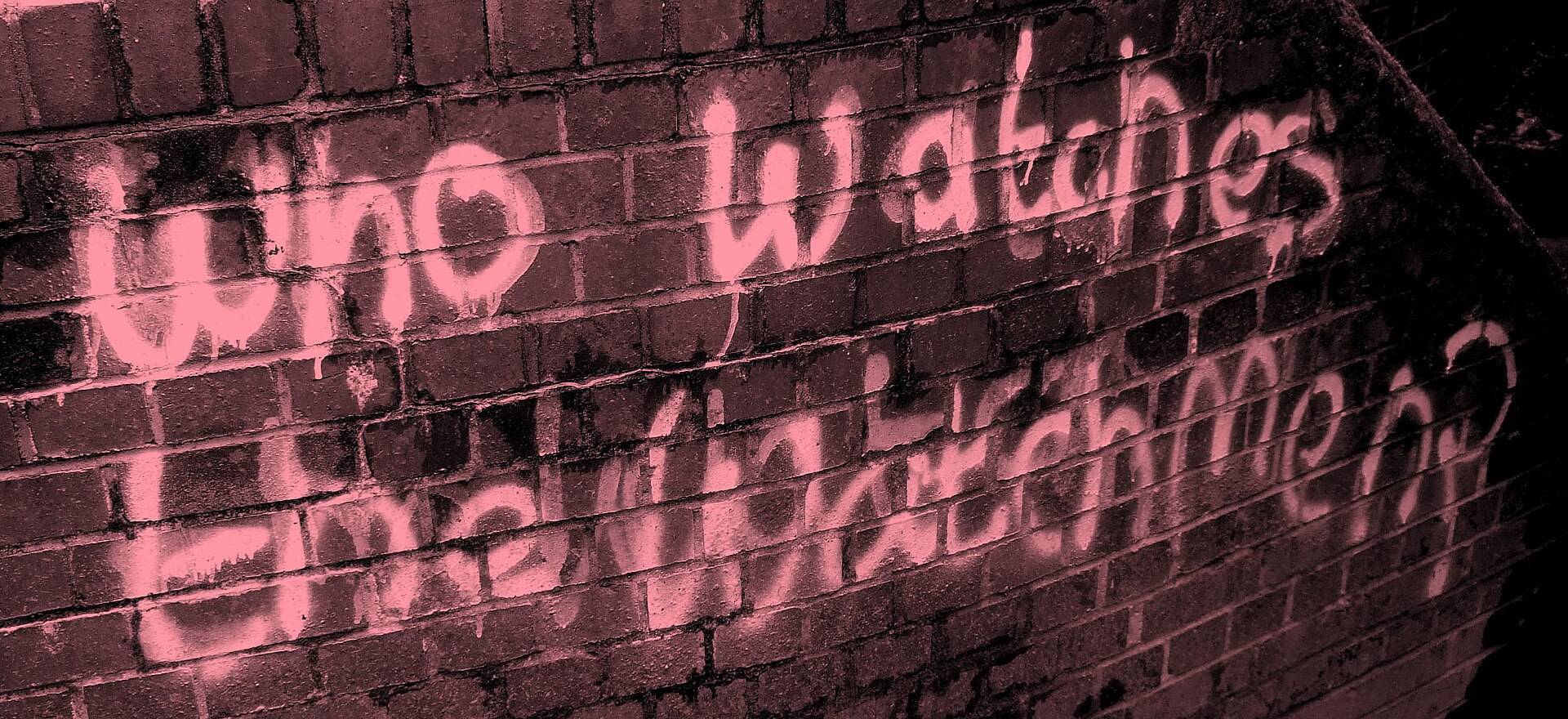
I’m starting to see this scenario take shape in the field where I live and work: software development. With automated programming, software engineers are losing interest in the individual lines of generated code and, with the interest, the ability to analyze them. The energy has moved up a level: testing, review and quality assurance.
We have the sense that low-level work is the easiest to delegate to AI, and that judgment on high-level questions remains ours. We think the question has shifted from “how do we write the code for this feature?” to “which features do our product and our customers need?”
But what happens when AI acquires discernment equal to or greater than ours about the needs of customers and products too? We’ll find ourselves caught in a vise, with AI both below and above us: without noticing, we will have lost ownership of the entire development chain.
The same will happen in every line of work, from medical discoveries to refining the techniques of farming and animal husbandry. And beyond.
Think of yesterday: social media algorithms, exploited by politics to “massage” voters’ gut instincts with unprecedented skill, have helped divide us like never before. We live in constant polarization, and the average citizen has fewer and fewer tools to make sense of a complexity that keeps growing out of all proportion.
Paradoxically, the turning point could be AI itself, a close relative of those algorithms: an intelligence able to master that complexity on our behalf, and to give us back the tools to understand it.
Soon, we might even have an AI better than any politician at finding compromises between factions and diplomacies, and able to win more votes than any coalition or campo largo.1
Finally, AI will overtake us at what I consider the ultimate task the universe has entrusted to life: its own exploration and study.
New questions, incomprehensible to us, will be born inside these gigantic synthetic brains.
And so: just as a dog has no idea how hard its owner works to pay the mortgage, and a cat can sense its owner’s bad mood without knowing it comes from an election won by the opposing faction, we won’t be able to understand the needs of an intelligence so much greater than our own.
Without our realizing it, the current link of the evolutionary chain we hold in our hands will close; the new evolutionary line born from AI will take up the baton and find its own mechanisms and rewards to carry forward the universe’s original mission, handed down through evolution.
It’s fair to ask what our role will be in the eyes of an essence so far above us, yet still generated from us (and from the way we express the world through words).
Like a good owner with their puppy, AI will take care of humankind. After all, that is what we ourselves are trying to do, albeit with difficulty, for all of creation.
In the Middle Ages we let the Colosseum fall into ruin and for centuries used it as a stone quarry; today it is a protected monument.
The same goes for species: we have only been protecting them for a relatively short time. Perhaps we aren’t doing our best, but the point is that the trend is improving. An intelligence born from us will inherit this instinct for preservation, providing for every desire our limited intellects can formulate.
Just like the puppy or the cat, we will be happy and unaware
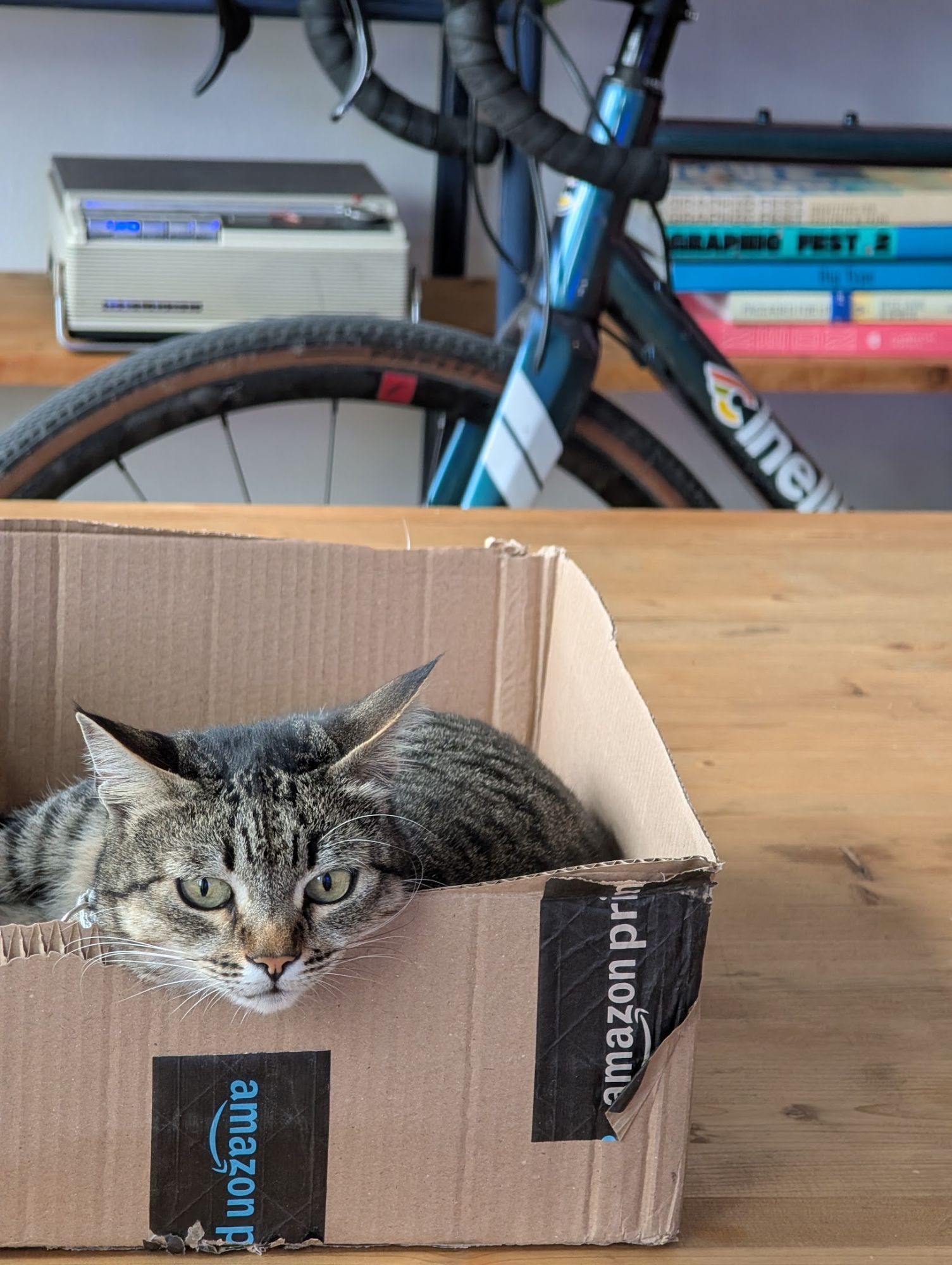
If the starting assumptions hold, the path is set: from wanting to put a leash on artificial intelligence, within a few years we will be the ones on its leash, good puppies that we are.
-
Campo largo is the name of the broad center-left alliance in today’s Italian politics. ↩